




Announcements
This is a scrolling content area for announcements about press releases, price changes, etc (Baen will provide and update these announcements)
This is a scrolling content area for announcements about press releases, price changes, etc (Baen will provide and update these announcements)
This is a scrolling content area for announcements about press releases, price changes, etc (Baen will provide and update these announcements)
This is a scrolling content area for announcements about press releases, price changes, etc (Baen will provide and update these announcements)
This is a scrolling content area for announcements about press releases, price changes, etc (Baen will provide and update these announcements)
Announcements
This is a scrolling content area for announcements about press releases, price changes, etc (Baen will provide and update these announcements)
This is a scrolling content area for announcements about press releases, price changes, etc (Baen will provide and update these announcements)
This is a scrolling content area for announcements about press releases, price changes, etc (Baen will provide and update these announcements)
This is a scrolling content area for announcements about press releases, price changes, etc (Baen will provide and update these announcements)
This is a scrolling content area for announcements about press releases, price changes, etc (Baen will provide and update these announcements)


Baen Free Radio Hour
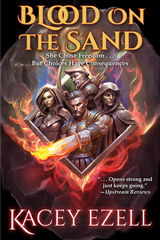
Griffin Barber sits down with Kacey Ezell to discuss her sequel to the amazing Magelight, Blood on the Sand. After that, we’ll have more One Jump Ahead by Mark L. Van Name, part 58
For the audio-only podcast click here
For the video podcast click here
Listen
Study Guides
A new teacher guide is available for 1637: The Peacock Throne


Young Adult
This is a list of books published by Baen deemed to be appropriate for young adults.
View List


Press Release
Malory Named 2026 Jim Baen Memorial Short Story Award Winner
Finalists exemplify the best of near-future, forward-thinking science fiction. Annual contest marks 18 years of highlighting bright futures and rising talent.
Read More
April Baen Ebooks Promotion
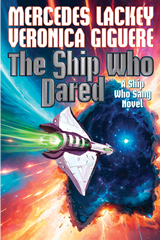
The Ship Who Dared Sale
Take $1 off of eBook copies of: Brain Ships The Ship Who Saved the Worlds The Ship Who Searched
Details here

Press Release
2026 JIM BAEN MEMORIAL SHORT STORY AWARD FINALISTS ANNOUNCED
Annual Contest Celebrates Stories Focused on Near-Future Space Exploration Contest Marks 19 Years Highlighting Bright Futures and Rising Talent
Read MorePress Release
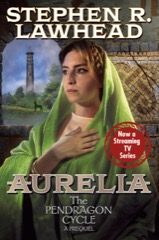
5 Million Views In One week: Pendragon Cycle Trailer Goes Viral
The official YouTube trailer for the upcoming live-action series The Pendragon Cycle: Rise of the Merlin has exploded to over 5 million views in just the first week.
Read MorePress Release
Baen Books Continues Publishing Eric Flint’s “1632” Novels
Toni Weisskopf has announced that Baen Books will be publishing more books in Eric Flint's 1632 series.
Read More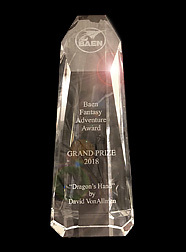
Press Release
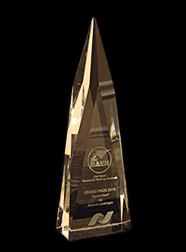
Baen Books Announces Winner of the 2025 Baen Fantasy Adventure Award
Baen Books is pleased to announce Gideon P. Smith as the grand prize winner of the 2025 Baen Fantasy Adventure Award for short fiction.
Read More
Press Release
2025 Baen Fantasy Adventure Award Finalists Announced
Annual contest continues to highlight new names and big adventures in the fantasy genre—with entries from all around the world!
Read More
Press Release
Gustavo Bondoni Named 2025 Jim Baen Memorial Short Story Award Winner
Finalists exemplify the best of near-future, forward-thinking science fiction. Annual contest marks 18 years of highlighting bright futures and rising talent.
Read More
Press Release
Griffin Barber Joins the Baen Team
Publisher Toni Weisskopf is pleased to welcome Griffin Barber to the Baen Books team, as of January 3, 2025.
Read More
Press Release
Black Tide Rising Graphic Novel Volume 2
Adapted by Comics Legend Mike Baron, Produced by Hound Dog Media
CROWD-FUNDING CAMPAIGN GOES LIVE ON INDIEGOGO
The second chapter of New York Times bestselling author John Ringo’s epic zombie apocalypse saga is being produced in graphic novel form.
Read More
Press Release
Baen Books Announces Winner of the 2024 Baen Fantasy Adventure Award
Arlen Feldman takes home the top prize for his short story “The Wish Doctor.”
Read More
Baen Books Announces Plans for Eric Flint’s Ring of Fire Series
Novels overseen by Flint before his death as well as reprints of the best of the Ring of Fire Press ebooks will carry the legacy of the best-selling alternate history series into the future.
Riverdale, New York, April 9, 2024 — Eric Flint’s Ring of Fire is the best-selling alternate history series of all time. When the small, 20th Century town of Grantville, West Virginia, is hurled through time and space to Europe during the 17th Century, the course of history is forever altered. And with the publication of Eric Flint’s groundbreaking first novel in the series, 1632, the course of the alternate history genre was forever changed. Flint and Baen Books opened the series to coauthors and fan writers, who wove a tapestry of novels, novellas, ebooks, and short stories that created a densely populated world. With Flint’s death in 2022, the future of the series was left uncertain.
Now, Baen Books announces plans for the future of Eric Flint’s Ring of Fire. Flint was working on the series up until the time of his passing. Baen will release these final novels, which will be completed by the authors Flint was developing the books with. Beginning with 1635: The Weaver’s Code, cowritten by Flint and nationally best-selling author Jody Lynn Nye, Baen will release:
1635: The Weaver’s Code by Eric Flint and Jody Lynn Nye (October 2024)
1637: The Pacific Initiative by Iver Cooper
Title TBD by Eric Flint and Walter Hunt
1637: Pilgrim’s Passage by Eric Flint & Griffin Barber
Title TBD by Eric Flint & Charles E. Gannon
In addition to the print novels, Baen Books will be rereleasing select books originally published by Ring of Fire Press. These include former Ring of Fire Press titles by Vrginia DeMarce, Bjorn Hasseler, David Carrico, Paula Goodlett & Gorg Huff, Garret Vance, Bethann Kim, and Mike Watson.
And while the Grantville Gazette, the online magazine edited by Flint that featured stories set in the Ring of Fire series, will no longer be published, the Flint estate has granted permission for a new online and ebook magazine to continue the tradition, begun by Flint, of welcoming new authors into the series. More information about Eric Flint’s 1632 and Beyond can be found at https://1632magazine.com. (Note: Baen Books is not affiliated with Eric Flint’s 1632 and Beyond.)
With new novels, reprints of Ring of Fire Press books, and more, Baen Books is thrilled to continue Eric Flint’s legacy into the future.
On the passing of Steve Miller
Steve Miller, best known for the long-running Liaden Universe® series of space opera stories and novels, coauthored with his beloved wife and partner Sharon Lee, died February 20, 2024, in their home in Waterville, Maine. He was 73.
Steve had been fighting heart trouble for several years and, old newspaperman that he was, had prepped his obituary for the trade months before. Steve had worked many jobs before becoming a full time writer, including managing early BBS systems, acting as an internet librarian, owning and managing a science fiction themed used bookstore and art gallery with his wife, and acting as a freelance reporter for many Baltimore area and national publications.
Steve leaves behind a legacy that has profoundly shaped the landscape of science fiction and inspired a generation of new writers. Last year saw the publication of their 100th collaboration together, the national best-selling science fiction novel Salvage Right; Ribbon Dance, also a Liaden novel, is scheduled for release in June 2024, and Sharon intends to continue the series as they had planned.
Steve’s interest in chess was lifelong. He was a member of the University of Maryland Baltimore County Chess League, a U.S. Chess Federation Tournament Director, President of the Owings Mills Chess Club, President of the Waterville Chess Club, and ran numerous tournaments in many venues. He was part of Waterville’s Main Chess League championship team in 1998.
We at Baen honor not only his remarkable literary achievements but also the warmth, kindness, and boundless imagination that defined him as both an author and a friend. “He was one of the good guys,” said his publisher Toni Weisskopf. “A true light shining in the science fiction community.” In this time of sorrow, our thoughts and condolences are with Sharon Lee, and the countless fans whose lives have been touched by Steve’s legacy.
Steve was predeceased by his father, Donald Miller of Madeira Beach, FL, his stepfather, Ronald L. Moore, Sr., and his mother, Helen Moore. Survived by his wife, Sharon Lee, and siblings Donald George Miller (Kim), Craig Edward Miller (Brenda), Cindy Rex (Ron Prietz Sr.), Roland L. Moore, Jr. (Kay) and numerous nieces and nephews.
Press Release
Zack Be Named 2024 Jim Baen Memorial Short Story Award Winner
Finalists exemplify the best of near-future, forward-thinking science fiction. Annual contest marks 16 years of highlighting bright futures and rising talent.
Read MoreJim Beall (BS-Math, MBA, PE) has been a nuclear engineer for over forty years, a war gamer for over fifty, and an avid reader of science fiction for even longer. His experience in nuclear engineering and power systems began as a naval officer. Experience after the USN includes design, construction, inspection, enforcement, and assessment with a nuclear utility, an architect engineering firm, and the U.S. Nuclear Regulatory Commission (USNRC).

The term “Artificial Intelligence” (AI) was coined by mathematician and computer scientist John McCarthy at a 1956 Dartmouth conference now deemed to be the birthplace of AI as a field of science, but the idea goes back nearly three millennia!
Read More
Press Release
Baen Books Signs Christopher Ruocchio for Sun Eater Series Finale
Baen Books has signed a contract with author Christopher Ruocchio to publish the final two books in his internationally award-winning Sun Eater series, as well as for a first look deal for Ruocchio’s next series.
Read More
You can now email EPUB Ebooks to your device directly from Baen.com!
We’re happy to announce an easier way to deliver our Ebooks directly from Baen.com to your favorite Ereader. You can now email EPUB files directly to your device from our site—no download necessary!
Learn More
Press Release
Baen Books Starts 2023 by Signing Two New Authors
Baen to publish new science fiction novels from authors Monalisa Foster and Marisa Wolf
Read More
Press Release
Baen Shares Plans for Future Eric Flint Novels
Lucille Robbins, Eric Flint’s widow and heir, in conjunction with Baen Books would like to announce the forthcoming titles from Eric Flint.
Read More
Press Release
Baen Books Signs Howard Andrew Jones to Five-Book Deal
Baen to publish sword and sorcery series The Chronicles of Hanuvar, with first book in August 2023
Read More
Eric Flint 1947–2022

It is with a heavy heart that we share the news that Eric Flint has passed away. We were proud to publish Eric’s first novel, Mother of Demons, in 1997, and to continue publishing his many worlds, including the best-selling Ring of Fire series that started with 1632.
There are several of Eric’s works already delivered and on the schedule. Eric was a tireless collaborator, and readers can also expect more of his works to be released with Eric’s designated collaborators in the future.
We will be celebrating Eric and his works on the Baen Free Radio Hour this week and the following week and encourage all to tune in.
—Toni Weisskopf
Publisher, Baen Books

Press Release
Author Wil McCarthy wins 2022 Prometheus Award for Rich Man’s Sky
Lakewood, Colorado author Wil McCarthy has been named the winner of the 2022 Prometheus Award for Best Novel, for his novel Rich Man’s Sky.
Read More
To Whom It May Concern:
What is it we do at Baen Books? We publish books at the heart of science fiction and fantasy.
Science fiction has traditionally been a unique kind of intellectual pleasure, a process of glorious intercommunication and inspiration, with ideas flowing from scientist and engineer to writer and artist, to reader and viewer, back and forth, in a delightful mélange of shared thoughts, wild speculation, cautionary tales, reality checks, and the sheer fun of playing with boundaries and ideas. It is not for everyone. But those who enjoy it, take great pleasure in the dialogue.
When the modern form of SF began, with Hugo Gernsback and the other pulp magazines of the early 20th century, the publishers fostered that interaction through letter columns in the magazines and by encouraging science fiction readers to organize in clubs and meet in conventions. Baen Books continued that tradition with Baen’s Bar, a kind of virtual convention and on-line conversation that has been around in some form for over 20 years.
The moderators are volunteers. The readers, editors, and writers post and interact on the Bar at their own desire. Some conversations have been gone over so many times, they’ve been retired as simply too boring to contemplate again. Sometimes the rhetoric can get heated. We do not endorse the publication of unlawful speech. We have received no complaints about the content of the Bar from its users.
That said, it has come to our attention that allegations about the Bar have been made elsewhere. We take these allegations seriously, and consequently have put the Bar on hiatus while we investigate. But we will not commit censorship of lawful speech.
It is not Baen Books’ policy to police the opinions of its readers, its authors, its artists, its editors, or indeed anyone else. This applies to posts at the Bar, or on social media, on their own websites, or indeed anywhere else. On the Bar, the publisher does not select what is allowed to be posted, and does not hijack an individual’s messages for their own purposes. Similarly, the posts do not represent the publisher’s opinion, except in a deep belief that free speech is worthy in and of itself.
Most sincerely,
Toni Weisskopf
Publisher
To all of those who expressed interest and support for Baen's Bar in recent weeks, we are happy to announce it is back on-line, though with some changes. Baen is handing the Bar over to its users, and will henceforth be run by SFF Forums, LLC, and may be found at https://www.baensbar.net. Returning users will be able to use the Bar as usual, but new members will have to make a purchase at baen.com before they can log in. (Note: New users will not have to buy a book; there is a Bar tipjar option so they may contribute to the maintenance of the forum).
—Toni Weisskopf for SFF Forums
Press Release
Baen Books Announces Author Reading Series on Facebook LIVE
Innovative Independent Publisher to Bring Author Readings, Q&As, and Convention-Style Programming to Facebook LIVE
Read More
Press Release
Baen Books & RBmedia Announce Audiobook Publishing Partnership
Over 170 titles from Baen Books to be published as audiobooks over the next three years
Read More